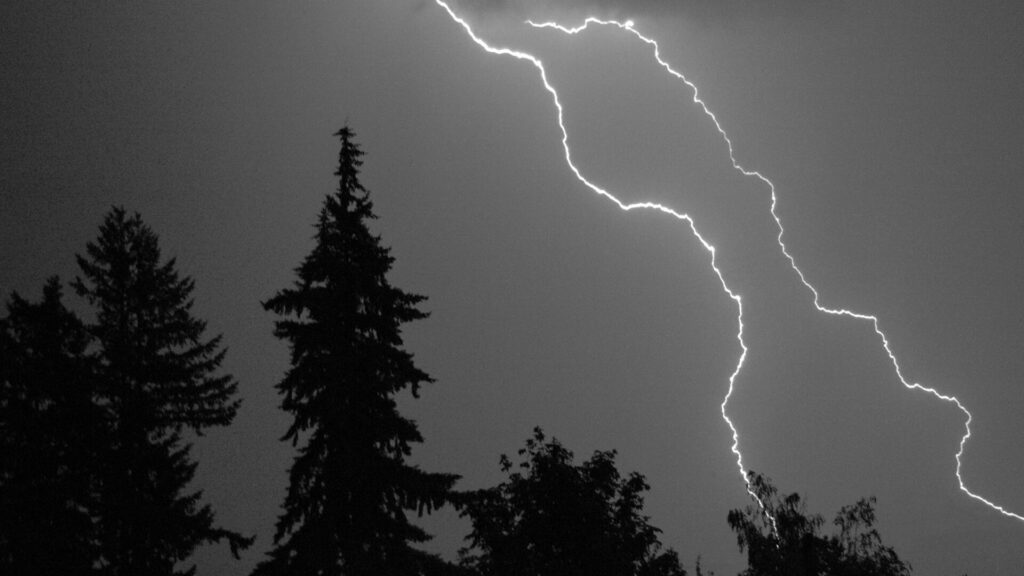
Lightning bolt in a dark sky above silhouetted trees.

Community, News

Lightning Safety Awareness Week

As Ohio recognizes Lightning Awareness Safety Week (June 21-27, 2026), Franklin County Emergency Management and Homeland Security (FCEM&HS) encourages all residents to know what to do before, during and after thunderstorms, and reminds everyone to practice severe weather safety and preparedness throughout the summer.

Lightning strikes continue to be one of the leading weather-related deaths in the United States. Many victims are struck before the storm fully arrives or after it seems to have passed—often while still outside. The key to staying safe? Preparedness.

“Every thunderstorm produces lightning, and every lightning strike carries the potential for serious injury or death,” said Jeffrey J. Young, Director of Franklin County Emergency Management & Homeland Security. “Many lightning-related injuries happen when people delay seeking shelter. Staying weather-aware, knowing where to take shelter, and being willing to change outdoor plans when storms threaten are critical steps in protecting yourself and others.”

Residents are reminded that performing a simple measure can drastically reduce the chance of severe injury or death during a storm: When Thunder Roars, Go Indoors!

The National Weather Service and FCEM&HS suggest the following lightning safety measures:

  • PLAN AHEAD – Thunderstorms are most likely to develop on spring or summer days, but can also occur at night and during any season. Be sure to have a weather safety plan, including a predetermined safe location. Sign up for ALERT Franklin County at www.alertfranklincounty.org to receive severe weather alerts automatically. You can also do this for New Albany-specific alerts by registering for our New Albany Alerts system (any combination of phone calls, emails and text messages). Please note that you will need to confirm a desire to receive weather-related messages when you register for the emergency community calls. Check the local weather when planning an outdoor activity and again before leaving home. Purchase a NOAA Weather Radio (NWR) with a tone alert that notifies when hazardous weather is in your area.
  • OUTDOORS – You are not safe anywhere outside in a thunderstorm. Lightning can strike as far as 10 miles away from where it is raining. Run to a safe building or vehicle when you first hear thunder, see lightning or observe dark, threatening clouds overhead. Stay inside until 30 minutes after you hear the last clap of thunder. Do not seek shelter under trees!
  • INDOORS – Move indoors as soon as possible when thunderstorms appear. Once inside stay off corded phones (use cellular or cordless phones instead), and avoid touching electrical equipment, or plumbing. Stay away from windows and doors, and stay off porches, and do not lie on concrete floors or lean against concrete walls. Stay indoors for 30 minutes after hearing the last rumble of thunder, and continue to monitor the local weather.
  • PROTECT YOUR PETS – Dog houses are not safe shelters. Dogs that are chained to trees or wire runners are particularly vulnerable. Bring your pets inside during thunderstorms.
  • HELPING SOMEONE STRUCK BY LIGHTNING – If a person is struck by lightning, call 911 and seek immediate medical attention. A lightning victim does not carry an electrical charge and is safe to touch. Knowing and implementing first aid measures, which include cardiopulmonary resuscitation (CPR), can help a person struck by lightning survive. Local American Red Cross chapters and many fire departments offer first aid and CPR classes.

For additional information on lightning safety, visit weather.gov/safety/lightning.

Share the Post:

Related Posts